
In her TED Talk entitled “Can Gen Z reclaim the art of conversation?,” Dr. Michelle Burke shares her insights from twenty years of classroom experience on the decline of the ability of Gen Z students to converse and build social connections. They lack skills such as making eye contact, reading facial expressions, and interacting authentically.
Language educators are experiencing the same phenomena in their classrooms. Students feel reluctant and unsure about participating in interpersonal interactions in the target language.
How can will help our language learners increase their confidence and comfort to communicate interpersonally?
Design supported, low stress interpersonal tasks that ensure success
In order for our novice learners to confidently interact and negotiate meaning in the target language, they need interpersonal practice every class meeting, in short spurts, and in low stress, low risk, and low stakes situations.
Let’s begin with the following strategies:
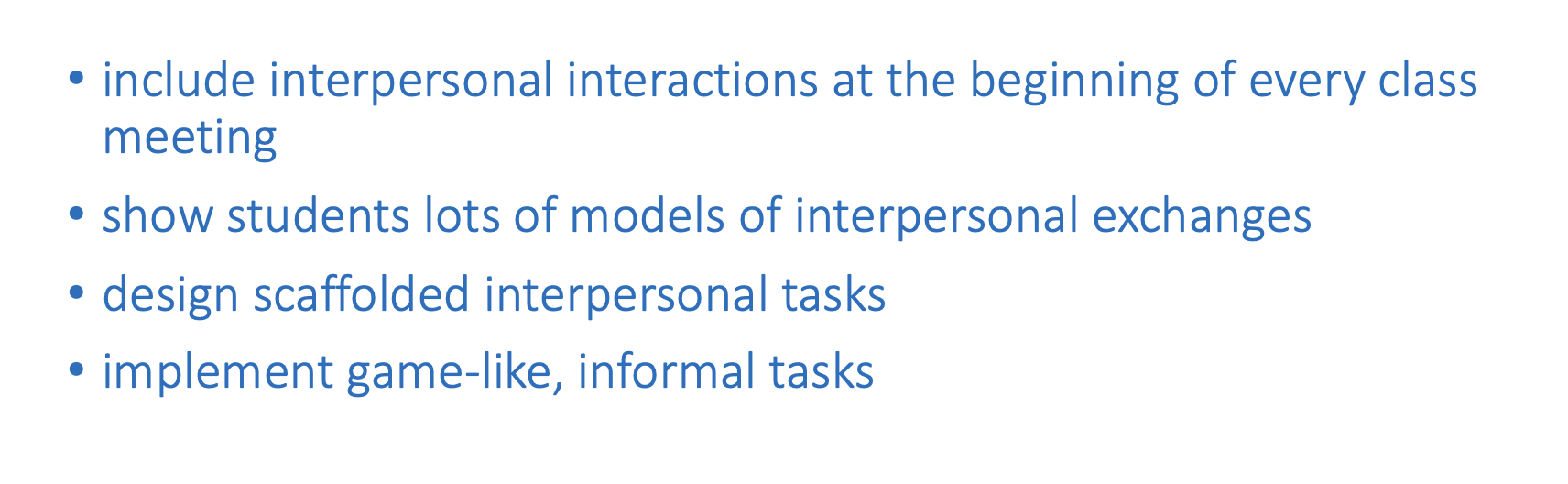
- One way to build student confidence in participating in interpersonal speaking is to begin every lesson with a “turn and talk” task as part of the opening routine. Provide students with a prompt such as a “question of the day” which they use as a conversation starter with a classmate.
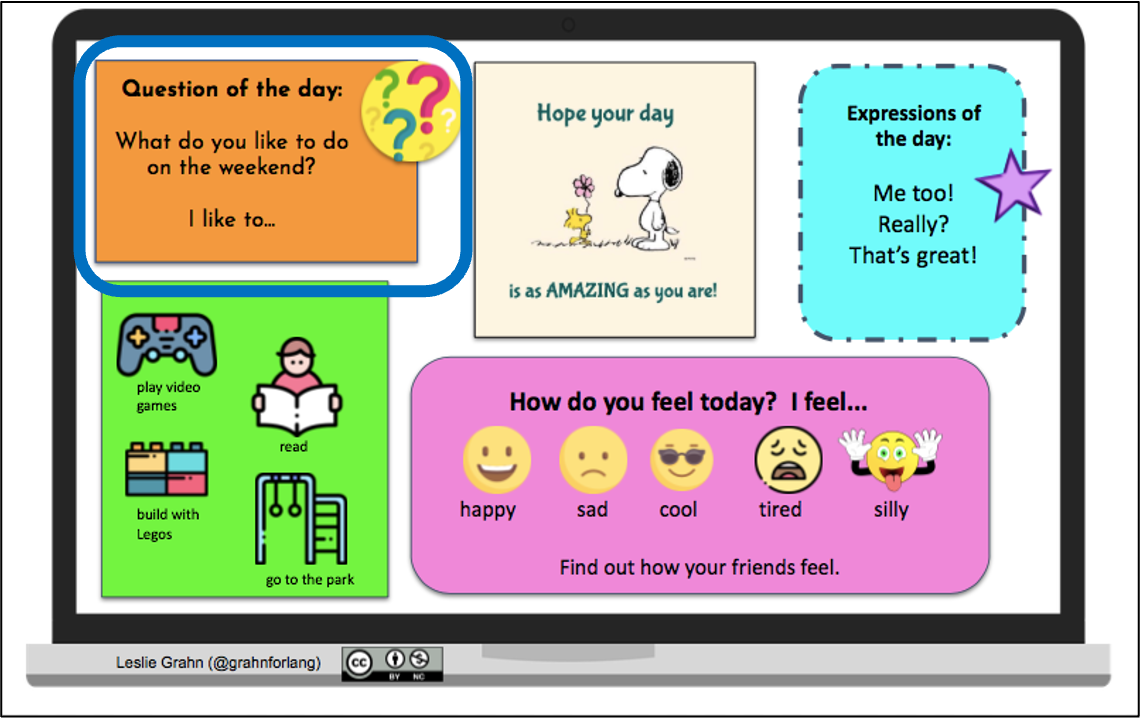
Similarly, students may conduct an interpersonal exchange through a daily Social Emotional Learning (SEL) check-in.
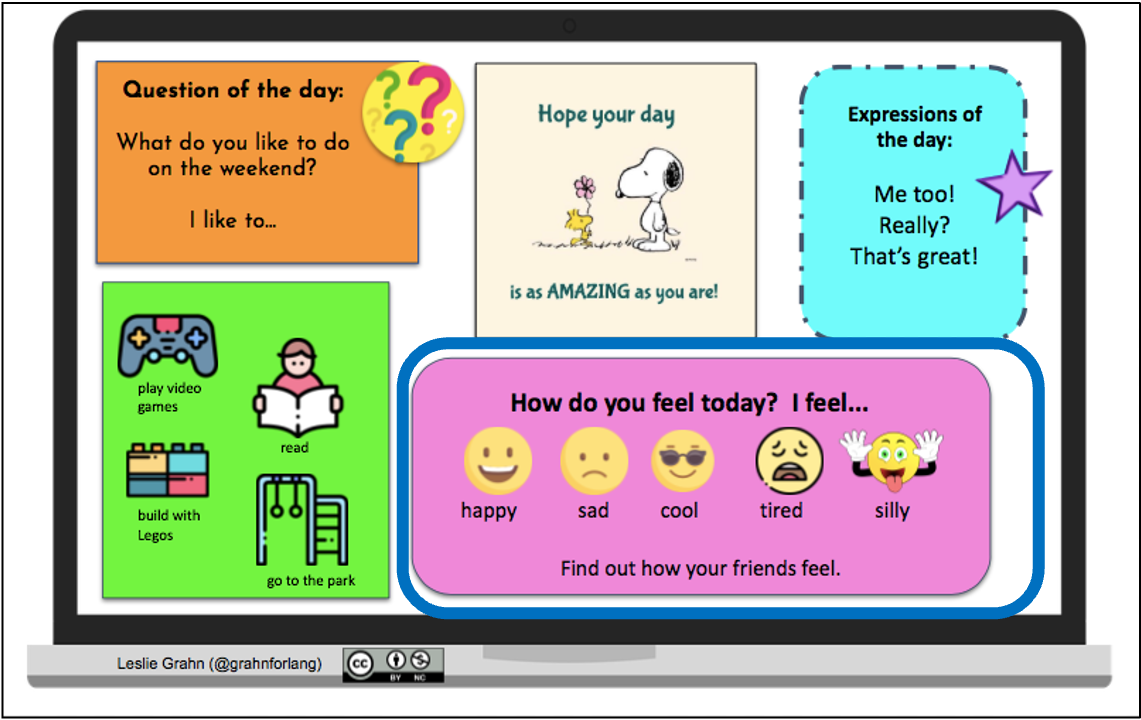
Looking for ideas for SEL check-ins? Check out this Pinterest board: https://www.pinterest.com/grahnforlang/social-and-emotional-learning/check-ins-on-a-scale-of-this-or-that-would-you-rat/

2. Another way to build confidence, is to show students lots of models of interpersonal exchanges, through live or recorded interactions. Some examples of sources for such exchanges include:
| Audio Lingua (in 14 different languages) | Dialogues in Spanish with audio |
| French Speaking Practice on TikTok | Italian Conversations YouTube |
| ASL Conversations (YouTube) | Chinese Conversation Clips (YouTube) |
As students listen to interpersonal conversations in the target language, they can use organizers like this one from Kylie’s Corner on TPT which is FREE! (https://www.teacherspayteachers.com/FreeDownload/EDITABLE-Speech-Bubbles-4860879)
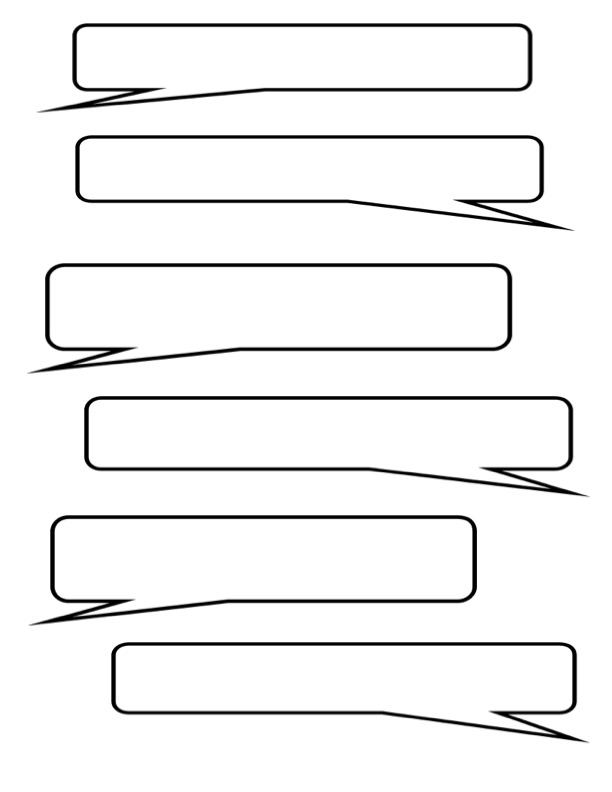
Students record what they hear either by scripting the entire conversation or by listing questions, responses, reaction phrases, etc. Students can also critique the interaction by suggesting ways the interlocutors could have improved the exchange. If the interpersonal models are via video, teachers may lead a class discussion about cultural products, practices, and/or perspectives that are evident.
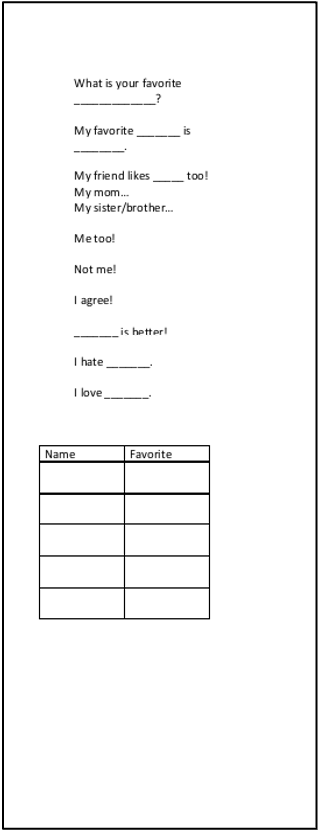
3. Designing scaffolded interpersonal tasks is an additional confidence-building tactic. Expression lists, sentence starters, charts, and graphic organizers can be added as scaffolds to tasks. Here is an example of a scaffolded interpersonal task from a unit on free time activities and hobbies using the inside-outside circle strategy.
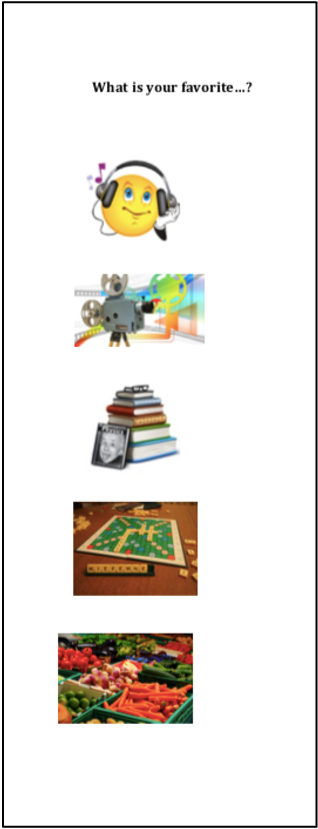
On the front of the card, students have a series of images that relate to categories of their favorite things. As they move from talk partner to talk partner, they ask and answer the question: “What’s your favorite _____?” (ex. music, movie, book, game, food).
On the back of the card, there are sentence starters and communicative fillers to support students in their interactions. In addition, there is a T-chart where students record their classmates’ responses.
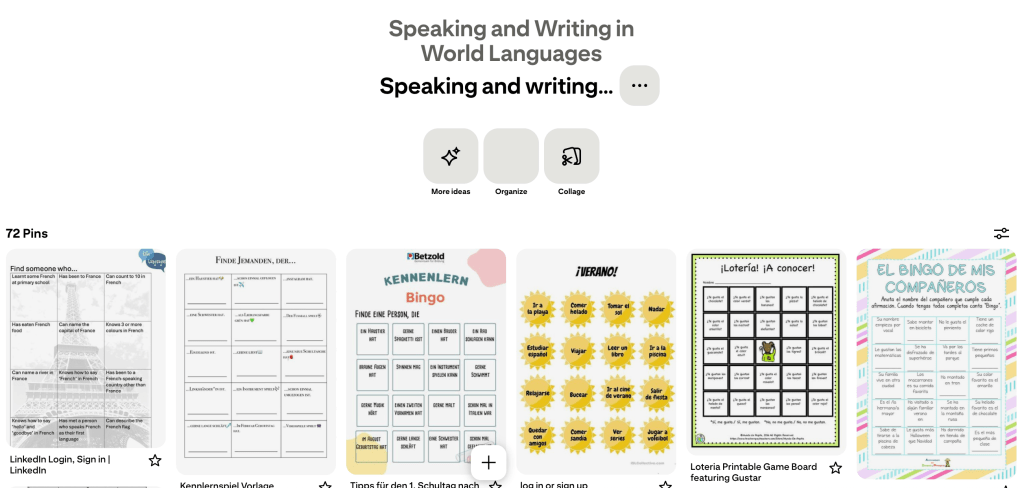
4. Finally, implement game-like, informal tasks for students to practice having interpersonal conversations. Strategies like Find Someone Who/Human Bingo, Speed Friending, Conversation Jenga, and Chat Stations can build student comfort in the interpersonal mode.
You can find lots of examples of those and similar strategies on this Pinterest board: https://www.pinterest.com/grahnforlang/speaking-and-writing-in-world-languages/speaking-and-writing-games/
Which strategy/strategies work for you? Which strategy will you try?
 passion4theprofession