Authentic texts provide real world contexts for language learners. They are motivating and engaging to students because they are relevant and meaningful to native speakers of the language. This blog post explores ways to marry technology tools with the interpretation of authentic resources.
First, we must acknowledge that all language teachers and language learners do not have equal access to technology in their schools and institutions. Some examples of technology accessiblity might include:
one teacher desktop computer for teacher use only
several desktop computers in the classroom
access to a laptop/tablet cart/set that can be signed out for use
access to a computer lab that can be reserved
a BYOD policy (Bring Your Own Device) where students may use their own laptops, tablets, or cellphones in school
one to one devices provided by school/district
Our 21st century learners view technology as a natural part of their every day lives. Technology is a tool for collaborating, for creating and curating, for communicating, and for doing research.
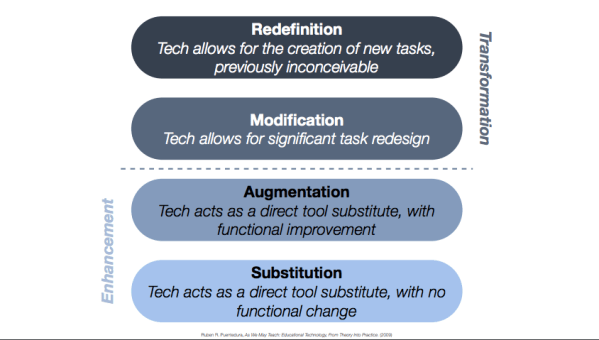
When selecting technology tools to implement into classroom activities, consider the SAMR model. The SAMR model was developed in 2010 by Ruben Puentedura to describe the four levels of technology integration.
As you can see from the SAMR framework, technology integration can transform and enhance the task at hand. What is the purpose of the technology tool being used? How does it enhance the student’s experience/learning? When reflecting on integrating technology into your lesson plans, the rubric below may be helpful to you:
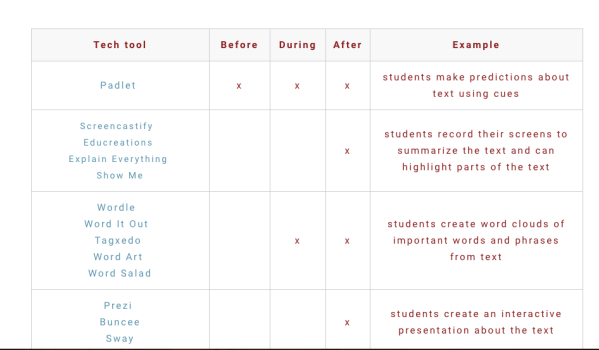
Examples of technology integration with authentic resources:
Before listening, reading, viewing activities:
Students make predictions about the authentic text using text features
Students brainstorm connections with and ideas and questions about the topic of the authentic text
Students list what they already know about the topic of the authentic resource
.
During listening, reading, and viewing activities
Students take notes about authentic text as they read
Students record new vocabulary and definitions from the authentic text
Students create flashcards for new vocabulary from the authentic text
Teachers check students’ understanding of the authentic text
Students write text messages or tweets about the authentic text
After listening, reading, viewing activities
Students record a summary of the content of the authentic resource
Students create a poster/infographic about the text of the authentic resource
Students retell the content of the authentic text in a story format
Students create a comic strip about the content of the authentic text
Students create a game about the content from the authentic text.
Students respond to a prompt about the text and respond to classmates’ posts
Students create an interactive presentation about the authentic text
For more ideas for integrating technology with the interpretation of authentic resources, click the image below:
What we know about brain-friendly teaching, is that the brain likes experiences that connect to one another. As we plan lessons for our language learners, we should keep this idea in mind. How do the tasks or activities I’ve planned for students to practice the new content connect to one another?
As we consider the use of authentic resources in our classrooms, how can those interpretive tasks naturally connect to productive language experiences in the interpersonal mode? The authentic text, whether it be a video, an infographic, or a poem, gives students a context for their interpersonal interactions, in lieu of inventing isolated, unrelated scenarios.
In the interpersonal mode, students spontaneously share information and ideas with others. Learners interact and negotiate meaning with clarity and cultural sensitivity. Students are expected to begin, carry on, and end a conversation without a written script, relying on the knowledge of the language they have acquired and using skills to communicate even when they do not understand.
To support students, especially struggling and reluctant learners, providing scaffolds and supports for them to persevere through an interpersonal task may be the key to building their confidence in their own communication skills. Some examples of scaffolds and supports might be
modeling the interpersonal task before students try it themselves
providing suggested sentence starters and frames
pairing struggling students with students who are more confident in productive activities
circulating in the room and giving positive feedback to students, especially those who typically struggle, for their efforts
There are many activities or strategies that teachers plan to give students interpersonal communication practice and experiences. Strategies provide a structure or framework for interpersonal interactions. Here are a few examples:
For a novice level Spanish class, the teacher selects the infographic, “Qué significa cada emoticon” (What each emoticon means) to enrich the students’ language for describing how people are feeling. Each student is given a copy of the infographic or access to it online.
The teacher leads the class through highlighting the adjectives in the infographic. He encourages students to guess the meaning of words with which they are unfamiliar using target language examples, circumlocution, and visuals, etc. to reinforce their meaning. The teacher makes connections between the highlighted descriptors and the work they have recently been doing with gender and number of adjectives. He asks the students to draw conclusions about how the highlighted adjectives in the infographic change to describe various people. The teacher does a guided charting activity with the students.
The teacher displays a list of simple situations in the target language on the document camera, using known vocabulary and lots of cognates. (You just won the lottery!, Your team lost the soccer match. You got a perfect score on your math test.). Each student selects one situation and creates a web of feelings about that topic, using vocabulary from the infographic.
In small groups, students interview each other about how they would feel in each of the situations using the infographic and the web they created. Group members may use an expressions list provided by the teacher as support for this interpersonal activity.
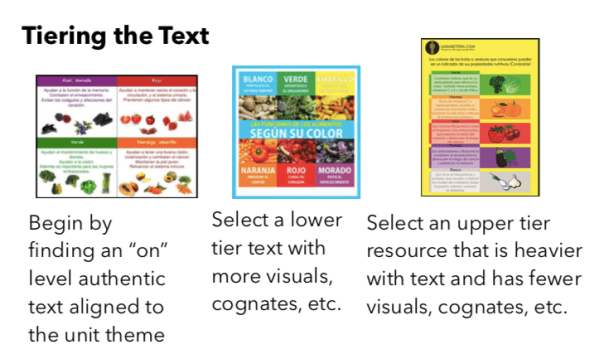
Here are some simple steps to tiering authentic text:
Look for multiple pieces of text at varying levels of difficulty or complexity on the same topic.
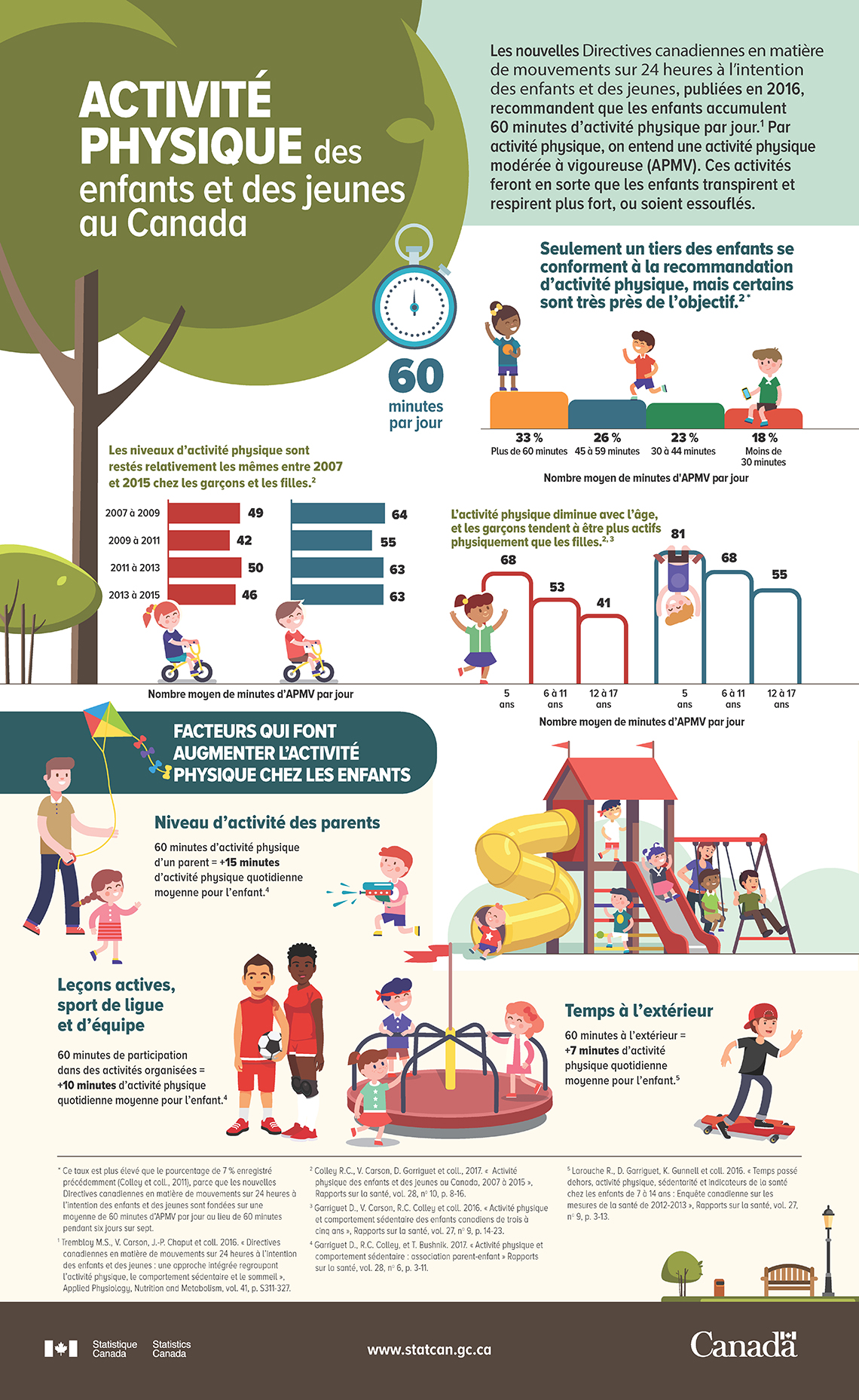
Here are three examples on the topic of Bullying in French. Determine which text will be for the lowest, mid, and highest tiers.
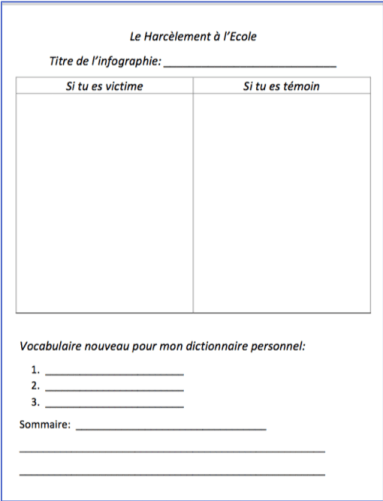
2. Decide whether you will tier the tasks as demonstrated in the previous blog post or design a generic task that will work for all three tiers like the one below:
Example scenario for tiering authentic text:
Students have a graphic organizer and one of three infographics of varying challenge levels on the topic of the physical activity level of children in Canada during a unit on healthy lifestyles in an intermediate level French class. Students are assigned an infographic based on their readiness level or may select an infographic. Students record information gleaned from the text on their graphic organizers.
Afterward, students are placed in mixed readiness groups of 3 or 4. In their small groups, students conduct an interpersonal conversation with their peers about what they learned from the text using their graphic organizers. Ideas acquired from group members are added to individual students’ notes on the graphic organizers.
The teacher may provide helpful phrases and/or sentence stems in the target language to students as a resource for their conversations.
According to the infographic…
It is interesting that…
I am surprised that…
Typically…
Generally…
In my opinion,…
Both
On the contrary
On the one hand/on the other hand
As a follow-up, student create a presentational writing product comparing their family’s level of physical activity with information from the infographics. The students are given a blank Venn diagram graphic organizer to plan their writing.
Aligned with the ACTFL Core Practices for World Language Learning, language educators are encouraged to “guide learners through interpreting authentic resources.” Authentic resources are created by and for the target language users, either for information or entertainment.
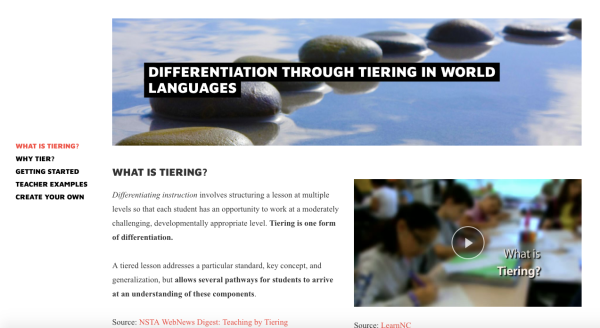
We have heard the phrase “Adapt the task, not the text.” The idea behind that quote is that once we alter an authentic resource in any way, it is no longer authentic. So, teachers are challenged to offer language learners opportunities to interpret authentic resources at the correct challenge level. One way to accomplish that goal is through tiering.
First, think about the wide diversity of language learners in your classroom. In any one classroom, there are students who are at varying levels of
language proficiency
motivation and engagement
and comfort with the target language classroom.
They are struggling learners, reluctant learners, disengaged learners, engaged learners, enthusiastic learners, and advanced learners and their needs are diverse and varied. Often, we assign tasks to our learners that are too difficult for some and far less challenging for others. This can cause frustration on the part of students and impact their level of commitment and engagement in tasks.
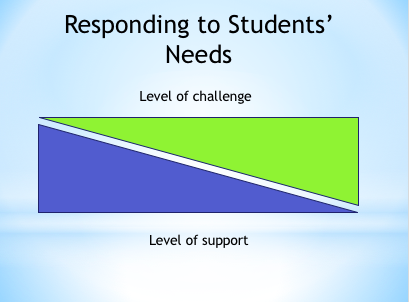
Due to this wide diversity, teachers respond to their students’ needs on a continuum. From low challenge and high support to high challenge and low support as illustrated by the graphic below.
What are supports?
“Providing support to students in the form of models, examples, sentence frames, and task-specific target language expressions which are subsequently removed as students become more confident and independent with their learning.”
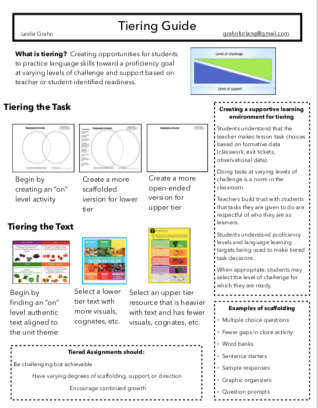
One way to meet the needs of the variety of language learners in the classroom, is through tiering. Tiering creates opportunities for students to practice language skills toward a proficiency goal at varying levels of challenge and support based on teacher or student-identified readiness.
Some examples of supports include:
Multiple choice questions
Fewer gaps in cloze activity
Word banks
Sentence starters
Sample responses
Graphic organizers
Question prompts
How do I create tiered tasks?
Step 1: Select the authentic text for your students to interpret.
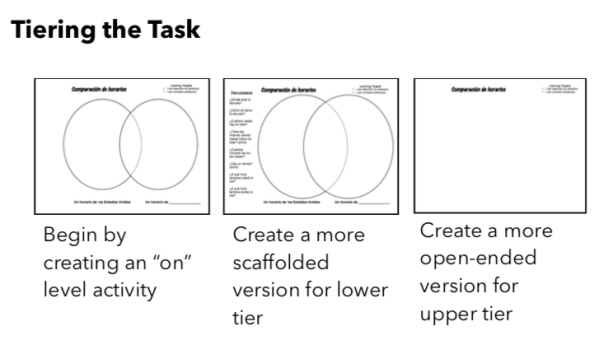
Step 2: Create an “on level” task.
Step 3: Create a more scaffolded task for struggling learners.
Step 4: Create a more open-ended task for advanced learners.
How do I decide which tier each student should be given?
determine the students’ readiness level based on formative data (exit tickets, classwork, performances, etc.)
allow students to choose their level of challenge
For more detailed information about tiering, download the Tiering Guide below:
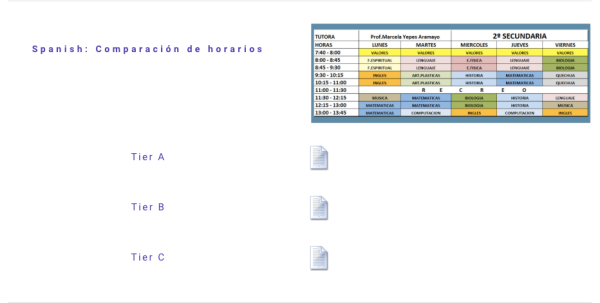
Example of tiered tasks for authentic text:
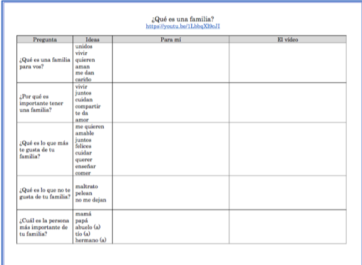
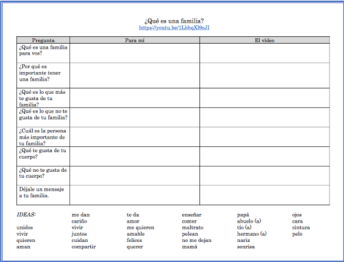
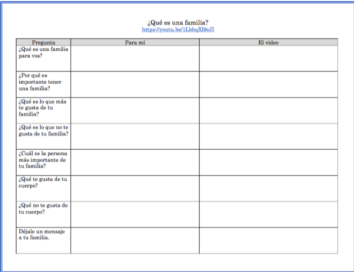
In an intermediate level Spanish class, students have been focused on the question, “What is family?” The teacher selects a video called “¿Qué es una familia?” which is produced by the Subsecretaría de Niñez, Adolescencia y Familia – Jefatura de Gabinete de Ministros – Gobierno de La Provincia de Santiago del Estero, Argentina.
The teacher creates tiered tasks for the video. She creates
an “on level” worksheet that provides a word bank at the bottom,
a version for struggling learners that provides a word bank for each question,
and a more open-ended version for advanced learners and heritage speakers that provides no word banks.
Students view the video and take notes on their worksheets. After, students are placed in mixed-readiness groups and each group receives one of the questions from the worksheet written on a large piece of chart paper. The group records their responses for the question on the chart paper.
When time is called, student groups rotate through the other questions, reading the responses written by previous groups and adding new ideas.
Once all groups have made the full rotation, the posters are displayed around the room. Each student selects one question on which he/she would like to create an oral presentation which they will record next class.
The thought of having novice language learners confidently interpreting authentic text is far-fetched for some. With their limited vocabulary and facility with the language, unlocking an authentic text can feel daunting to beginning language learners.
It is magical to walk into a classroom and see students sitting in chairs and lying on the floor, fully engaged in reading books in the target language, both fiction and non-fiction, that they chose based on their interests.
How do we build students’ confidence with interpreting authentic texts?
One strategy is to provide students with regular opportunities to read independently in the target language.
What are the benefits of providing independent reading time to students?
It builds confidence with reading in target language
The texts are sources of comprehensible input and add to students’ vocabulary and understanding of structure and syntax
Choice is motivating and engaging
The experience increases fluency
Reading texts of choice adds to cultural knowledge
It allows students to read text at their challenge level
Here are some basic steps to start independent reading time in your language classroom:
Provide access to students to target language books.
Many language teachers have a library of children’s books that they have collected over time from purveyors such as Amazon, book stores, and speciality foreign language book sellers.
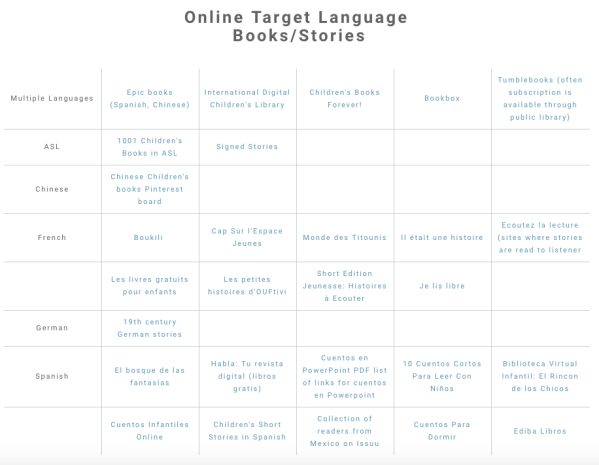
In addition to buying hard copy books, many target language readers can be found online. Click the image below to access a page on my website where you will find links to multiple sources for online books:
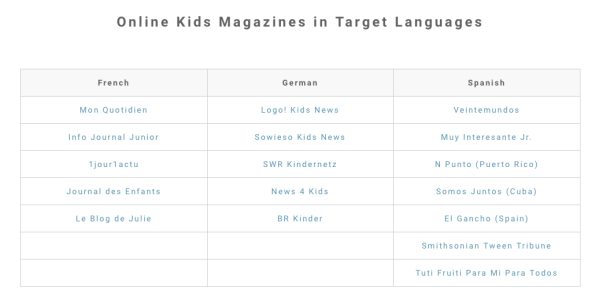
On that same webpage, you will find a list of online target language magazines:
2. Decide how independent reading will figure into your planning
Students will benefit the most from recurring opportunities to read a book of choice in the target language. Will you provide class time every other week or on a weekly basis for students to read independently?
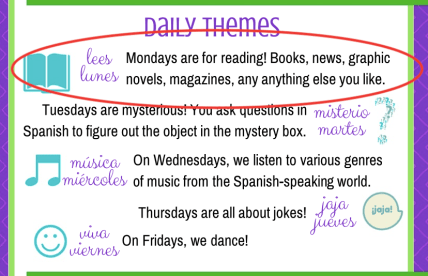
One approach would be to have a designated day of the week for independent reading. It may be the first or last fifteen minutes of a class. Independent reading may also be an option for students who complete tasks early.
3. Hold students accountable during independent reading while keeping it low stress
Because the purposes, among others, for independent reading time are for students to read freely in the target language and to maintain a low affective filter where students take risks during independent reading time, it is not advised that students are assessed on what they read. The intent of independent reading time is not to check comprehension and have students complete worksheets. Some examples of student accountability during independent reading time include: keeping reading logs, recording new words they learned through their reading in their personal dictionaries, and creating a short journal entry that summarizes what they read.
4. Ensure students, especially novices, feel confident enough to read in the target language independently
This poster gives students a protocol to follow when they encounter a word they do not know while they are reading. It is also important to make sure learners understand what a language learner at their current proficiency level is expected to be able to do with text. Finally, learners need to be reassured that they do not need to understand every word they read and that they can use text features such as visuals, titles, and captions to unlock the meaning of the text.
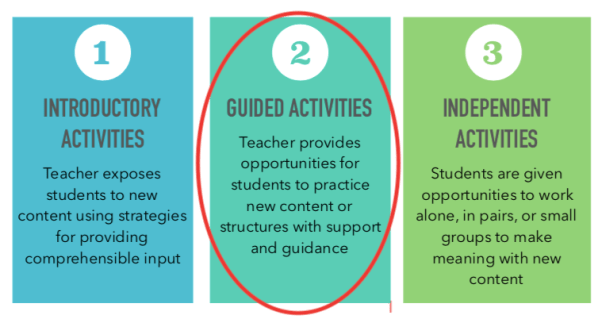
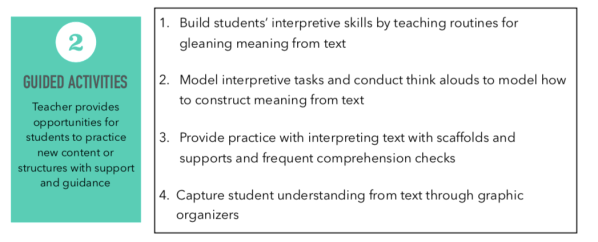
During the “guided instruction” phase of lessons, the teacher provides support and guidance through practice with new content or structures that move students toward independence with their language learning.
During this phase of a lesson, the students try out their new learning through tasks that are intentionally created or selected by the teacher that gradually release control to the student.
Guided activities can also serve as a context for teaching students routines or processes that will aid them in “owning” their new learning. When interpreting authentic text, the goal of guided tasks is to increase student confidence in their ability to unlock meaning in authentic texts.
Some types of tasks a teacher may select for guided activities include:
Here are some examples of teachers using authentic text in guided activities:
Example 1:
The teacher provides a copy of a poem entitled “La Vie” to students in an intermediate level French class and displays a copy on the document camera. The teacher talks students through interpreting the text in the target language using a routine called “Text Mark Up.” The students use colored pencils, markers or highlighters. The students mark all words in the text that they know in one color. Then in a second color, mark all words they can guess because of their similarity to another word in the target language or as an English cognate. Finally, students use a third color to mark words/phrases they can guess through context.
.
The teacher uses target language examples, circumlocution, and visuals, etc. to reinforce the meaning of unknown words.
The teacher asks students to work in pairs to guess the main idea of the text based on their highlighting and other text features. The teacher records pairs’ ideas as they are shared.
Example 2:
For an intermediate level Spanish class, the teacher selects a song by Romeo Santos called “Héroe Favorito” which demonstrates imperfect subjunctive and conditional “si” (if) clauses in context.
The teacher gives the students a copy of the lyrics. He leads the students through unlocking the meaning of the song by having students identify words they know, words that they can guess that are cognates, and words they can guess through context. The teacher uses target language examples, circumlocution, and visuals, etc. to reinforce the meaning of unknown words.
The teacher then shows the music video for the song.
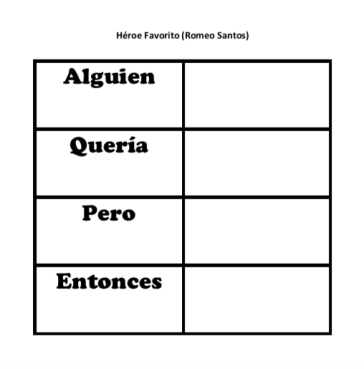
The teacher gives students a graphic organizer that lists all of the superheroes mentioned in the song. The teacher models the first row with the class and writes the ideas on a copy of the organizer which is projected by the document camera. The students then work in pairs to complete the organizer about each superhero based on the lyrics. When time is called, each pair meets with another pair to share their ideas captured on their graphic organizers.
On the reverse side of the first organizer is one called “Somebody Wanted But So.” The teacher chose to use this organizer as a guided activity because this is the first time students have seen this tool. The teacher uses questioning strategies to deepen students’ comprehension of the song lyrics by collaboratively coming up with ideas for the prompts in each row. The teacher models the process doing a “think aloud” by projecting the graphic organizer on the document camera and recording student ideas as they are offered.
Using the ideas gleaned on the organizer, students write a summary sentence about the song.
As a follow up activity, students create their own superhero using the prompt, “If I were a superhero, I would…” by telling what they would be called, what powers they would have, etc.
Through learning centers, students have the opportunity to demonstrate independence in their language learning in all of the skills areas: listening, speaking, reading, and writing. At each center, students interact with content in a variety of ways through a range of modalities.
Learning centers can also be a venue by which students interact with authentic text. To start the process:
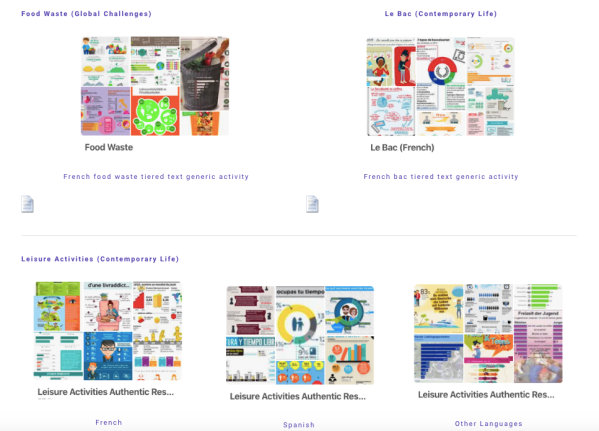
collect authentic text (memes, quotes, infographics, comics, articles, commercials, videos, etc.) on the unit topic.
decide which skill area each authentic resource logically would match (ex. a commercial for the listening station).
design the task students will do at each center with the authentic text.
To vary the challenge level at each center, more than one resource or text may be available to students. Advanced learners and heritage speakers might interact with a more challenging text and struggling learners might have a text that has more visuals or cognates. Those choices are all based on students’ proficiency levels and their level of mastery of the content.
Here’s an example of what learning centers based on authentic text might look like:
In a novice Spanish class, the teacher has developed a set of learning centers for the students at the end of the unit around the Can-Do statement of “I can describe myself and others.”
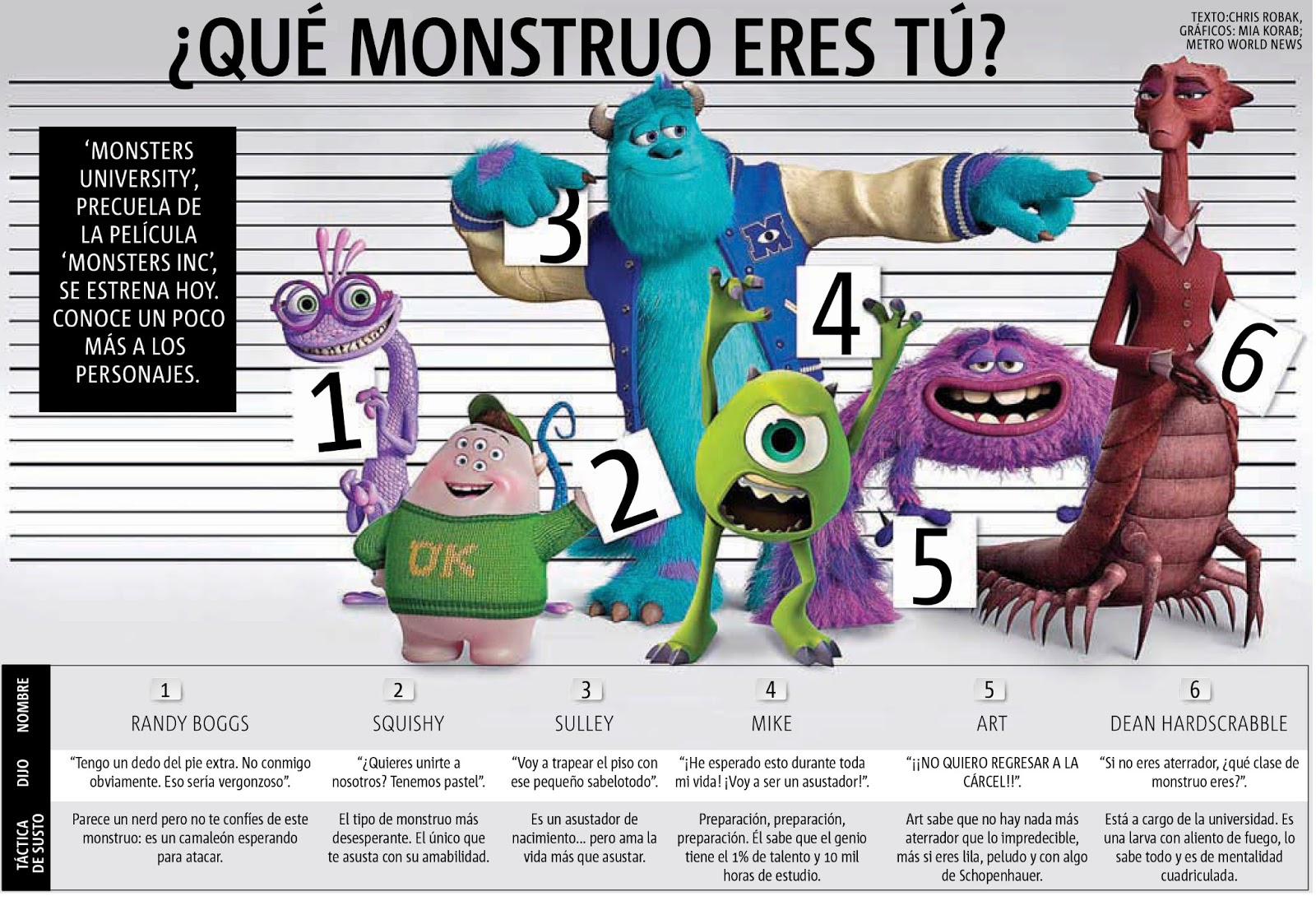
Speaking center: Students select between two infographics about the characters in the TV show, The Big Bang Theory”, and the movie, “Monsters Inc.” They select one character and give clues to their group members about the person. Group members guess which character their classmate is describing. The teacher provides a useful expressions card at the center which includes suggest sentence frames and vocabulary for students who need the support.
Reading center: Students read the transcript to the commercial, “Sin gol, no hay fútbol.” They list opposites they find in the transcript. At the end, they are to tell what they think the commercial is about using their own words. As an extension, the students watch the video.
(created by Heather Sherrow (hsherrow@hcpss.org)
Listening center: Students watch the music video “Somos Uno” and complete a tiered cloze activity (multiple versions where fewer or more words are missing) for it. The extension activity is for students to create a new verse of the song using the song as a model.
(created by Heather Sherrow (hsherrow@hcpss.org)
Writing center: Students choose to interpret one of two memes called “Soy única” and “Pequeñas Cosas.” They use the meme as a guide to create a similar one about themselves.
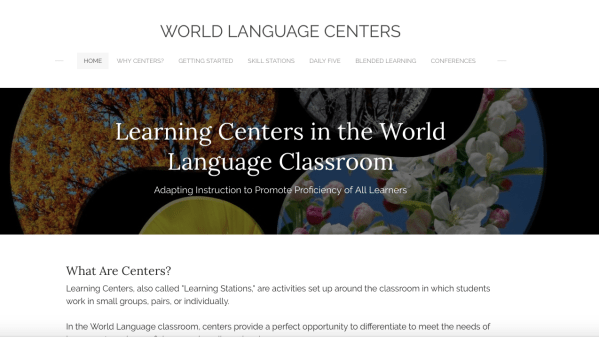
If you are interested in learning more about implementing centers into your language classroom, a great site to visit is: http://worldlanguagecenters.weebly.com/
On that site, you will find guidance on how to create, organize, manage, and implement learning centers in your classroom.
Now, let’s turn to using authentic resources to teach grammar in context. ACTFL, in its Core Practices for World Language Learning, practice number 5 states “teach grammar as concept and use in context,” encouraging students to focus first on meaning and later on form.
For teaching grammar as concepts in meaningful contexts, ACTFL recommends that:
*Grammar should be addressed within meaningful communicative contexts as one element of language proficiency.
*Instead of focusing on grammar rules and diagramming sentences, teachers should guide students towards an understanding of how grammar functions.
*Students learn how to use the form rather than memorized conjugations that may not be applicable across contexts.
Why?
*Research shows explicit teaching of grammar has little effect on language acquisition.
*Thinking of grammar in terms of concepts will broaden learners’ understanding and use of the target language
*Grammar should be learned implicitly through target language use and explicitly through the discovery of grammar rules through use of meaningful examples.
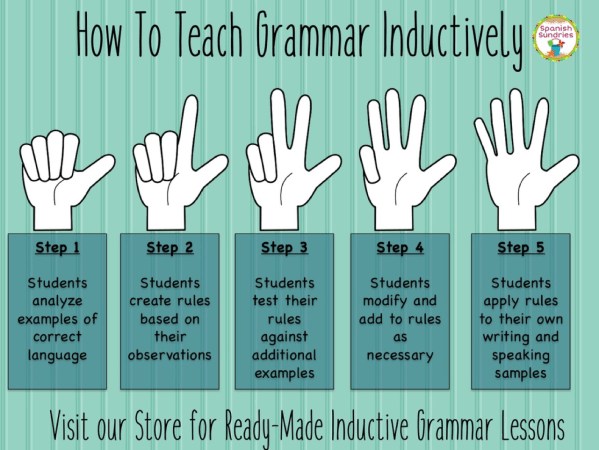
This “function over form” approach allows students to analyze language structures, make guesses, and draw conclusions though an inquiry-type process. This new way of approaching the teaching of grammar moves us from the traditional lesson segment, most often taught in English, where students are given paradigms such as verb conjugation charts. Instead, it empowers learners to use the big picture of their experiences with the language they have heard, viewed, and read as a basis for deriving meaning from discourse.
There are several approaches that can be implemented to assist students through the inquiry process:
The teacher of a novice level Italian class, during a unit on family, gives students a handout with a variety of lists generated from two infographics, “Quanti sono” and “Gli Animali da Compagnia.” [PRESENTATION]
In small groups, students make predictions for each set (most popular pet, how pets are acquired, identity of owners, etc.). The teacher shows the infographics and students check their predictions against the data presented. Each small group of students is given two sentence strips. One has “We predicted that _______” and the other “We were surprised that ______” (in the target language). Groups share their sentences with the class.
Next, the teacher asks students to find words in Infographics with which they are unfamiliar but can guess using the visuals or because they are cognates. The teacher uses target language examples, circumlocution, and visuals, etc. to reinforce their meaning:
millioni
spendono
veterinari
accessori
Students are provided a list of question frames about the infographics in Italian. Students work in pairs asking and answering the questions.
How many _____ are there?
Are there are more _____ than _____?
Are there fewer _____ than _____?
Do you have ______ at home?
Who has _______?
If the teacher feels the students are ready, in lieu of providing question frames, students write their own questions that are answered in the visual using the teacher’s questions as models. The students then pair to ask and answer student questions with a partner.
After, the teacher leads the students through a discovery process such as concept attainment, using the resource to draw conclusions about how plurals are formed in Italian which was a concept that students struggled with in the previous class. Students use a T chart to chart out their ideas showing singular forms in one column and plurals in the other. The teacher asks students to extend their thinking to other vocabulary words they know. [ATTENTION, CO-CONSTRUCTION, EXTENSION]
As an extension activity, small groups of students create one question for a combined survey about pets using Google Forms for their classmates:
What pets and how many they have
How they got their pets
Age of their pets
Who in the family takes care of the pet(s)
Once the data is collected, students compare the data with the data from the infographics.
Scenario B
For a novice level Spanish class’s homework assignment from the previous class, the teacher uses the flipped model by asking students to review an infographic and a video about the imperative (El Imperativo) and take notes on an organizer that has columns labeled “You do” and “You don’t do.”
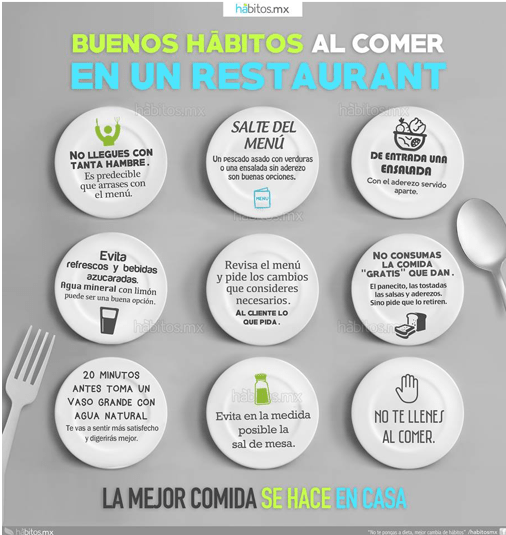
For the following class, the teacher shows the infographic, “Buenos Hábitos al Comer en un Restaurant” (Good habits for eating in a restaurant) as part of a unit of study on the theme of healthy eating habits. The teacher leads the class through interpreting the infographic, using target language examples, circumlocution, and visuals, etc. to reinforce the meaning of unknown words. [PRESENTATION]
Students create a T-chart with the columns “Estoy de acuerdo (I agree)’ and “No estoy de acuerdo (I disagree).” Students organize the tips on the infographic into the two columns. The teacher then asks students to share their opinions with the class, providing sentence stems. The teacher adds to the list in response to student need.
In my opinion…
When I go to the restaurant, I…
I agree/disagree with…
It is difficult to…
I agree because it is ______.
Next, the teacher draws students’ attention to the use of the imperative in the infographic. The teacher and students collaboratively add to the chart from the homework that shows infinitive forms of verbs, “You do,” and “You don’t do” and then come up with a rule about how the imperative is formed. [ATTENTION, CO-CONSTRUCTION, EXTENSION]
As an extension during a subsequent class, the teacher guides students through creating an infographic about advice for eating in the school cafeteria.
Scenario C
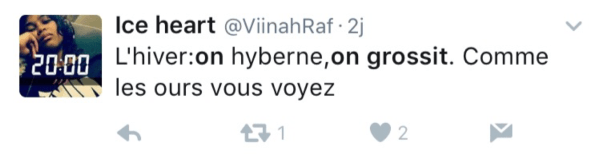
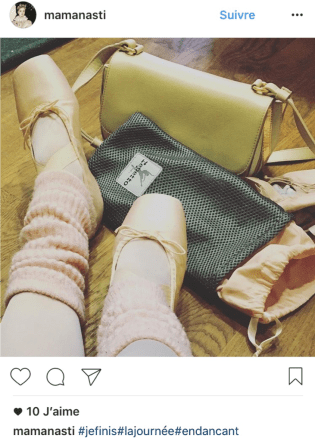
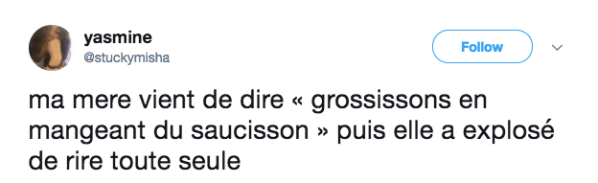
For a novice level French class, the teacher shows examples of regular -ir verbs in context using authentic resources (memes, tweets, and other social media posts) in the form of a PowerPoint.
The first time through the Powerpoint, the teacher asks questions about each image in the target language.
What is the guinea pig doing?
According to Ice Heart what happens in winter?
What did Yasmine’s mother tell her about eating salami?
Students are given a table that contains infinitive forms of the -ir verbs given in the context of the authentic resources. The second time through the PowerPoint, students fill in their observations about the -ir verbs based on the visuals.
After, in small groups, students discuss what they think the rules are. They then complete the second table based on their conclusions:
As an extension activity, in small groups, students create a meme using an -ir verb.
For more resources on teaching grammar in context, visit https://www.grahnforlang.com/grammar-in-context.html
ACTFL, in its Core Practices for World Language Learning challenges language educators to “guide learners through interpreting authentic resources” and speaks to the implementation of tasks using authentic text that are interactive, are focused on comprehension, and include the appropriate scaffolds and support.
What do high quality lesson plans include? Activities that…
When thinking about how to embed authentic text into lesson plans, let’s first reflect on some examples of how to plan lesson activities that are high quality. Lesson activities should…
be aligned with the learning goals and targets
have a common thread or connection
be engaging and relevant to students
provide practice in all three modes of communication (interpersonal, interpretive, presentational).
Thinking about activity types in a lesson plan
How do authentic resources fit into my lesson plan? Let’s begin with thinking about your lesson plan in terms of the activity types:
Introductory activities
Introductory activities include warm-ups (bellringers, do now’s, etc.), lesson hooks, and introduction of new vocabulary or language structures. It is important to note that not all introductory activities occur at the beginning of a lesson plan. Some examples include activities or tasks that:
gain students’ attention
tap into students’ prior knowledge
connect new content with prior learning
provide input of vocabulary and structures
engage students in an inquiry process about new content
Scenarios for using authentic text in introductory activities
Scenario #1: Provide input of vocabulary
Early in a unit on the world of work and careers in a novice level French class, the teacher uses an infographic, “Les professions qui font rêver les Français,” as a lesson opener. She chose this authentic resource due to its visual support and cognates.
The teacher asks some initial questions about the infographic. Some sample teacher questions:
Who is a famous _____?
Who works with students? With animals? With numbers?
The teacher asks the students to talk about the infographic with their partners. Students are given sentence frames and conversational phrases to assist them with their partner conversations.
____ percent think that a ____ is an ideal career.
I agree/disagree.
In my opinion, I think _____ is an ideal career.
I’d like to be a ______,
Really?
Not me.
My _______ is a ______.
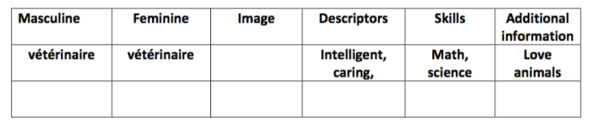
Using the infographic, the teacher leads the class through charting the gender of the career words and drawing a symbol for each. To extend their use of language, students practice using previously learned descriptive adjectives and school subject vocabulary with the career words. This information is added to the charting activity. The teacher gives the students sentence frames:
A _________ needs to be _____.
A _________ needs to be good at _______.
Later in the lesson, students will be introduced to additional vocabulary related to careers and will add them to their charts based on the patterns explored earlier in the lesson.
As a follow up, students create a guided writing product on a career of their choice with the help of sentence frames provided by the teacher.
Scenario #2: Gain students’ attention
The teacher of an intermediate level Spanish class selects the meme, “¡Quítamelo!” (Get off of me!) to gain students’ attention at the beginning of class. Students are asked to do a free write about the story behind the photo.
The teacher gives the students guiding questions in the target language to assist them with their writing:
Who does the bird belong to?
Where did the bird come from?
Why is the bird on her head?
How does the girl feel?
Then, students are asked to share their ideas with their partners/small groups. Small groups vote for the best description and those are shared with the whole class.
Next, students are asked to come up with alternative titles for the photo in a command form (affirmative or negative). The teacher addresses any gaps that arise regarding placement of direct and indirect object pronouns in affirmative and negative commands which has been addressed in previous lessons. If needed, the teacher responds by showing various examples to clarify the forms. The teacher may also remind students of the diffrerence in placement of object pronouns in declarative statements.
As a follow-up assignment, students create their own meme using a positive or negative command form with direct and/or indirect object pronoun.
Scenario #3: Connect new content with prior learning
For a novice level Portuguese class, the teacher selects the infographic, “Pense Antes de Comer,” (Think Before You Eat) to connect prior learning of food vocabulary and numbers with the new content about healthy lifestyles and exercise.
The teacher begins by reviewing the food vocabulary from the infographic by asking questions such as:
Do you like ______? Who likes _______?
Do you eat /drink ______?
She then uses either/or questions to check for comprehension (ex. Which has more calories, a milkshake or 2 pieces of pizza?) She asks students to act out what they think the various exercises suggested in the infographic are.
The teacher provides sentence frames to assist students working in pairs or small groups in interpreting the infographic through writing sentences in the target language:
___________ have ______ calories.
If you want to eat ______, you have to do ______.
The teacher points out the use of the infinitives in Portuguese for “wanting to ___” and “having to ___” phrases in the target language. The teacher asks students to apply the structure to other verbs they know. Their ideas are recorded on the board/document camera.
The teacher challenges students to come up with a summary sentence about the infographic in the target language. As an extension, students do research to add a row to the infographic.
Stay tuned for the next post in this series where we will explore ways to use authentic resources in guided practice activities.
Can my novice language learners interpret authentic text? This is a question I have gotten quite a bit lately. Most language educators are very comfortable with exposing intermediate and advanced level learners to authentic materials from the target language culture(s). Their level of confidence is rooted in the fact that students at the intermediate and advanced proficiency levels, through their learning experiences, have acquired enough language and a sense for how discourse is organized in the target language to be able to handle the challenge.
But, when it comes to novice level learners, there is real hesitation. Let’s explore some of the challenges and possible solutions to them.
Do novice learners have the skills to interpret text, particularly if it contains words and phrases with which they are unfamiliar?
Novice level learners benefit from being taught routines and procedures for approaching text. These routines should be modeled for learners as they are guided through the processes. Some examples include:
using text features such as visuals, titles, and captions
looking for cognates
using context to derive meaning
2. What can I expect novice learners to do with text?
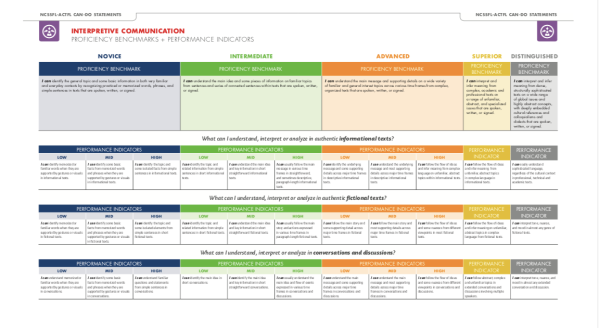
In speaking with educators about unsuccessful attempts at having novice learners interpret authentic text, my standby response is: “Is what you were asking them to do aligned with what the ACTFL-NCSSFL Can-Do Statements and the ACTFL Performance Descriptors for Language Learners tell us novices can do?” Here’s a screenshot from the Can-Do Statements:
When interpreting authentic text, novices can:
list words with which they are familiar
make a guess about a word that looks/sounds like one they know
categorize ideas into simple categories
write a short summary sentence describing the purpose of the text
complete more complex tasks with modeling and sentence framing
(You can download a copy of the checklist above by clicking this link.)
When designing interpretive tasks for your novice learners, use the Can-Do statements and the bulleted list above to guide your planning. Ensure that the tasks you are giving the students are in line with what learners at their level can do. Asking students to demonstrate interpretive skills too far above their ability level may cause frustration, disengagement, and push back from students. It may also perpetuate the students’ belief in their inability to read, write, and view authentic text in the target language and derive meaning from it.
3. Where do I begin?
Start small. Opening a class with a meme or quote that reflects the current thematic unit can be a great confidence builder. Memes are visual and can engage students through humor and interest. Memes and quotes can also provide an example of language structures in context. Here are some resources for you:
4. Believe that novices can interpret authentic text.
Using the ideas in this blog post, I challenge you to begin to incorporate authentic text into your lesson plans for novice level classes. And as with all new strategies, after having implemented them, reflect on the impact the interpretive tasks using authentic text had on student learning and student engagement.







 .
.



































 Here are some examples of teachers using authentic text in guided activities:
 .
. 
















 Later in the lesson, students will be introduced to additional vocabulary related to careers and will add them to their charts based on the patterns explored earlier in the lesson.


 passion4theprofession