Multi-level classes, sometimes called mixed ability or combined classes, refer to groups of students who are enrolled in different courses and are combined into one class or section. For example, both German 3 and German 4 students may be combined into one class.
Multi-level classes tend to occur in scheduling situations where there are too few students signed up for a particular course. The choice on the part of the school scheduler is to either cancel the course altogether or to combine the students into a class of a different level course.
Strategies for teaching multi-level classes
I would argue that every world language class is a group of mixed levels even though it may have a label like “level 2.” In a proficiency-based classroom, the teacher is offering both support and challenge to a wide range of learners with the goal of providing learning experiences to students that allow them to advance along the proficiency continuum. Language teachers are accustomed to differentiating instruction for their classes on a daily basis. Many of the suggested strategies within this post for multi-level classes are applicable to all language classes.
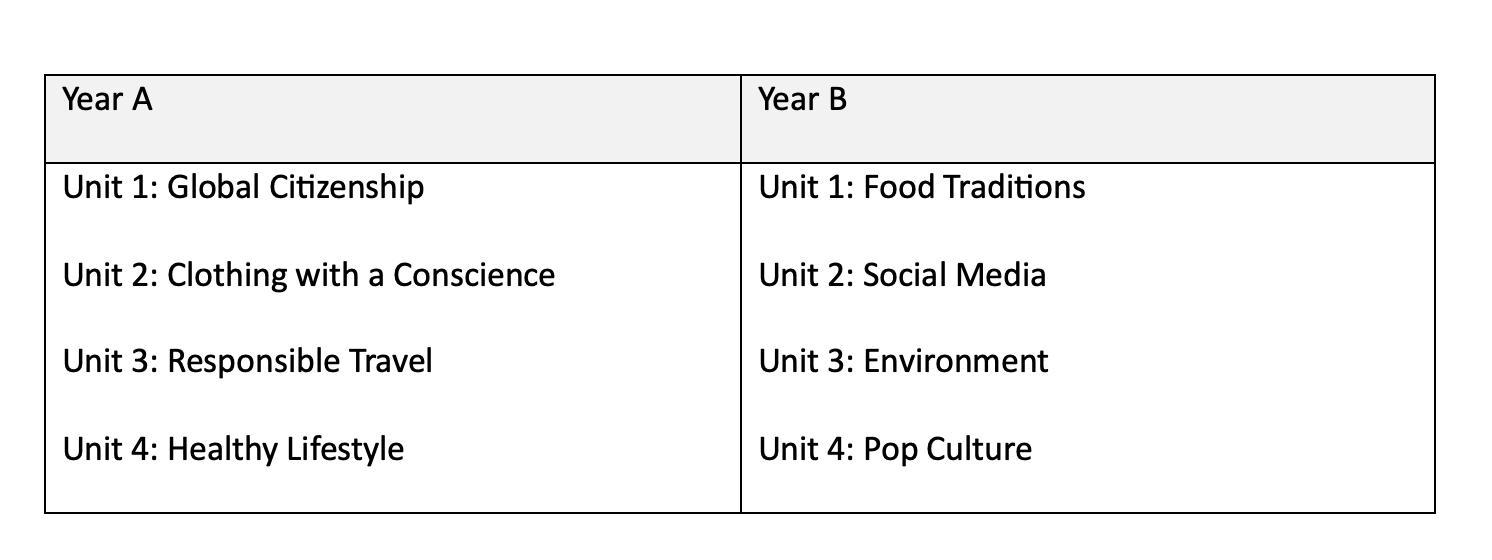
One approach to multi-level classes is where the teacher selects high interest unit themes for a Year A course and other themes for Year B. The students of both levels experience the same content themes and direct instruction (Year A) aimed at the proficiency targets for both levels. Students who continue the following year in the multi-level classroom will have a new set of unit themes (Year B). Through classroom tasks, the expectations for student performance will differ based on their level. Some small group instruction may occur for specific skill building based on the students’ proficiency expectations per level.
Here is an example of Year A and Year B curriculum themes:
Some additional strategies and approaches for multi-level classes are:
1.Open-ended tasks: The teacher designs communicative tasks that allow students to demonstrate their language proficiency in the communicative modes. Using real world prompts, open-ended tasks
- have multiple valid answers
- encourage creativity and deeper thinking
- and allow for personal responses.
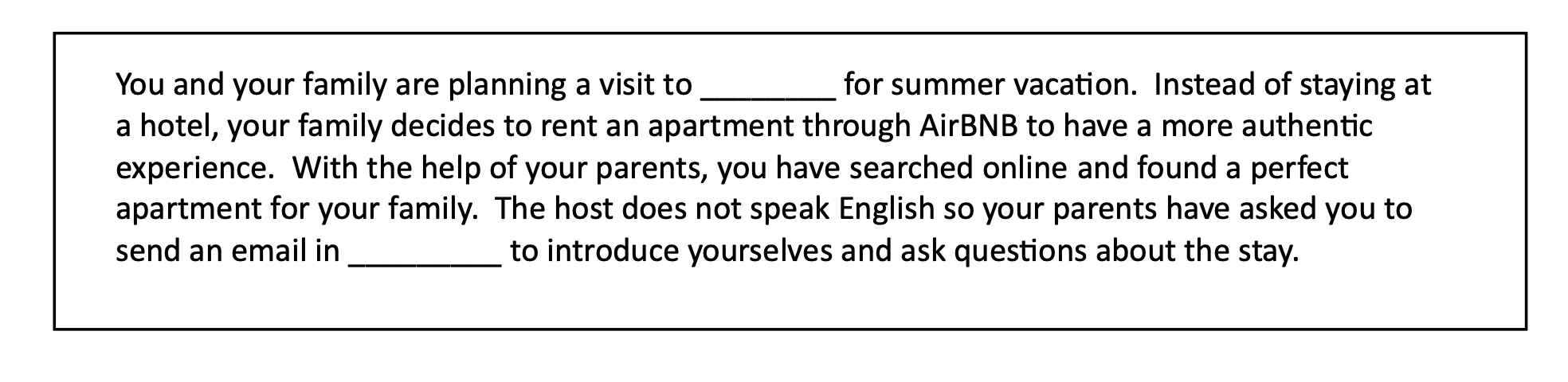
Here’s an example of an open-ended task prompt for presentational writing:
You can find resources and guidance for designing performance task prompts here: https://www.grahnforlang.com/designing-performance-tasks.html
2. Flexible grouping: Students are given multiple opportunities to work with a variety of partners and small groups, including those of the same level, different levels, or similar interests. Students learn from and support one another through collaborative work. Processes and protocols for flexible groups include cooperative learning strategies.
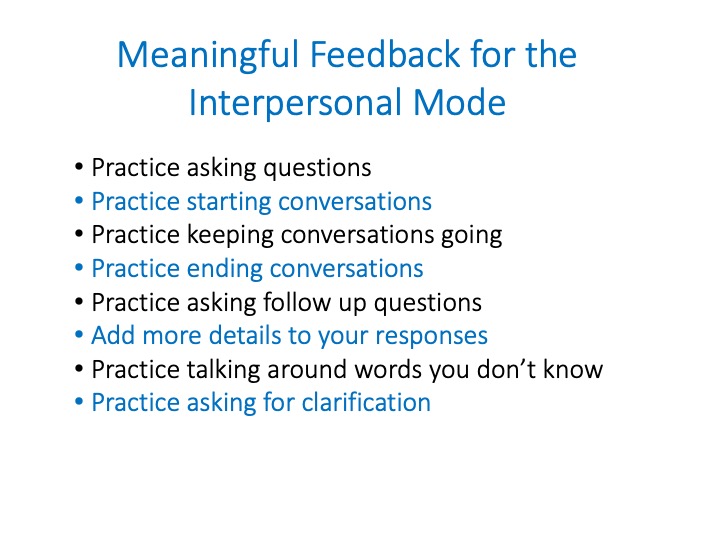
3. Student self-assessment and goal setting: Students are given frequent opportunities to self-assess and set goals for their growth in language proficiency using rubrics and checklists. They are also provided specific, meaningful feedback on a regular basis on how they can advance in their proficiency.
Below is a sample list of feedback for students in the interpersonal mode from which teachers might choose:
4. Learning centers/station rotation: Students practice speaking, listening, viewing, reading, and writing skills through a variety of open-ended tasks that allow them to demonstrate their language proficiency. The learning stations may include a teacher-guided center where the teacher does mini lessons with a strategically chosen group of students. For more details on learning centers, here are links to previous blog posts on the topic: Post #1, Post #2, Post #3
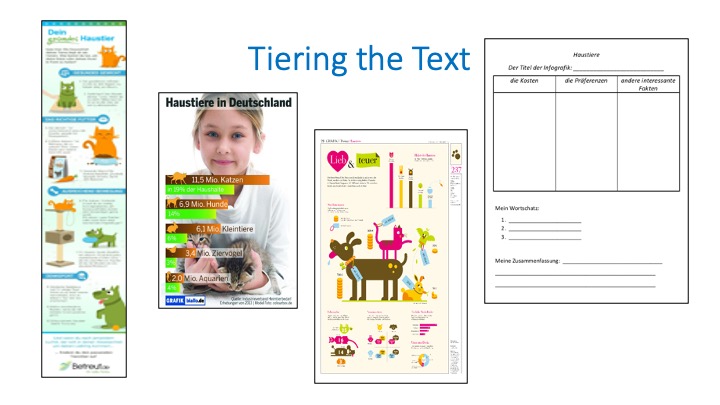
5. Tiered texts and tasks: The teacher provides students with authentic texts and tasks of a variety of difficulty levels that allow for differentiation of support and challenge to students. For more details on tiering texts, check out this blog post. For more information on tiering tasks, see this blog post.
Here is an example of three authentic texts in German on the topic of family pets of a variety of difficulty levels. Note that one chart can be used by all students while interpreting the differentiated texts.
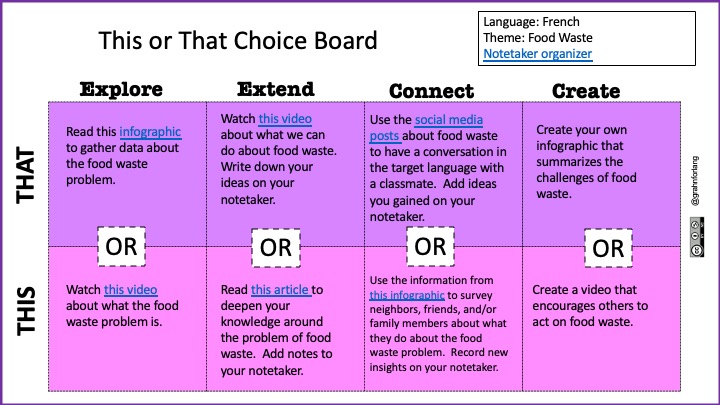
6. Student choice and voice: Students are given agency over their learning by having choices in the tasks they complete. The teacher also solicits input from students on the language they want and need to express themselves. Choices may be provided through choice boards, free voluntary reading, and through project-based learning.
This is an example of a This or That choice board on the topic of food waste for French students:
To do a deeper dive into the topic of multi-level classes, here are some resources for you:
Teaching Mixed Level Classes (YouTube): https://www.youtube.com/watch?v=q4BUSfhZta0: A video from Klett World Languages
Teaching Mixed Proficiency levels: https://ioannanifli.wordpress.com/2021/08/17/teaching-mixed-proficiency-levels/: ESL focus, has helpful visuals
Multilevel World Language Classes: Teacher Perspectives and Practical Solutions: https://files.eric.ed.gov/fulltext/EJ1390096.pdf: A research article
Supporting Mixed-Ability Classrooms: Research in Language Education Facebook Group: https://www.facebook.com/groups/902405863258202/posts/3376695779162519/: Helpful strategies visual